
A Roadster and Escaping the Loop
On first motorcycles, borrowed confidence, and the roads that teach you
The black tank held the heat like roofing tar. August in Virginia, and the air had stopped pretending to be gentle. I stood next to a 1996 BMW R850R with a fresh motorcycle endorsement and a confidence that existed only on paper.
Forty-three thousand miles. Bedliner black. Corbin seat. A clubman fairing over the round headlight that made it look less like a gentleman’s roadster and more like something built by a practical man with a garage and no interest in making excuses. Half cafe racer, half tourer.
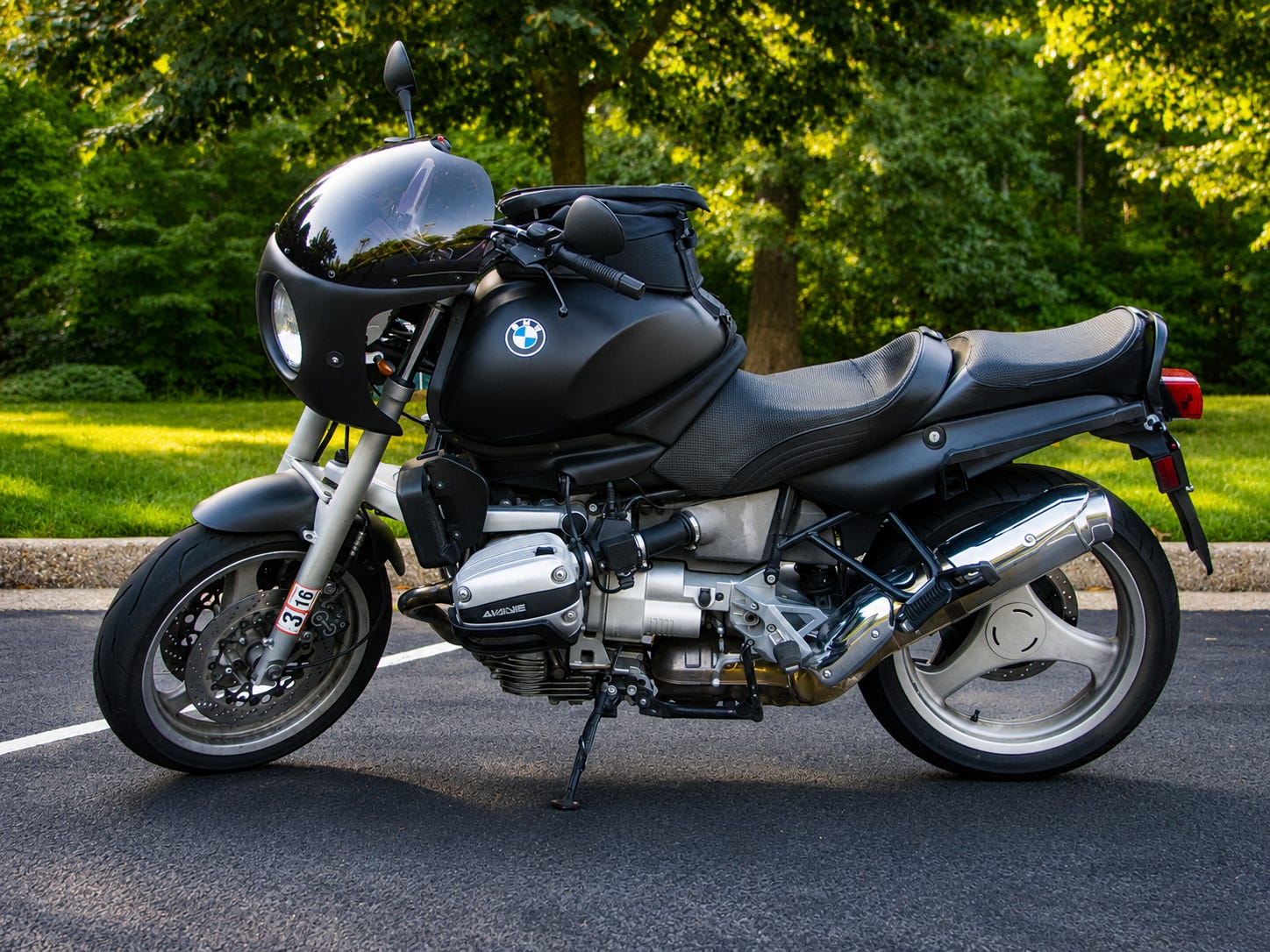
I had looked at a Honda Nighthawk 750 too. By every sensible measure that may have been a better first motorcycle. But the BMW stood proudly on its center stand like it was ready to go places and did not care much whether I was competent enough to go with it.
The first time I swung a leg over it, it felt too big and too top-heavy. Not impossible, just serious. The boxer engine and large fuel tank gave the bike width and character, and the weight seemed to live somewhere higher than I expected. The clutch was good, though. Smooth and honest. The power came on gently and without malice.
The seller let me ride it down the cul-de-sac. “If you drop it, you buy it,” were his words. I felt for the friction zone as I had been taught, easing the clutch out and learning where the BMW began to move. Once I felt mildly confident I eased away stiff in the shoulders, probably holding the bars too tight, trying to look like a man who had done this before. The bike moved forward easily enough, and for a few seconds with my feet on the pegs I thought perhaps I had crossed some private border into motorcycling adulthood.
Then I reached the end of the cul-de-sac and had to turn around. I could not make the turn. Not cleanly or with dignity. The BMW suddenly felt as wide as a farm gate, as tall as a horse, and heavy too. I stopped, put both feet down, dismounted, and walked it around in a careful 180-degree arc like a man maneuvering a refrigerator across a polished floor. Then I got back on and rode it to the seller.
I loved it immediately. Black and silver, scarred but properly maintained, it looked ready to leave. The BMW was larger than I needed and heavier than I knew how to handle, but sitting on it, I could already imagine the road beyond the cul-de-sac.
I did not ride it home that day. There are times when pride is useful, and times when it is just another loose item waiting to jam a control linkage. I had a three-year-old son at home, a young family, few motorcycle skills, and no business pretending I was able to wrestle an unfamiliar large bike through 64 miles of Hampton Roads traffic on my first day. The seller brought it to me on a trailer. That was how my first motorcycle came home, not roaring up the street under my command, but strapped down and delivered like a piece of machinery that had arrived before its owner had learned to use it.
I lived in Kiln Creek then, a neighborhood in Newport News, and Kiln Creek has a road that loops around it for about four miles. That circuit became my first country. Almost every night, after my son had gone to bed and the house had settled into that tired quiet known only to people with small children, I would go outside and uncover the BMW.
The summer night air was still warm and thick. The black tank held a little heat from the day. I would thumb the starter, and the boxer would catch with the dry, raspy confidence of an old BMW. The heads ticked. The exhaust had a coarse note through the stock pipes. There was always a faint smell of oil, not enough to worry about, but enough to remind you that this was an engine with age and history and hot metal inside it.
The transmission expected commitment. Each shift landed with the deliberate clunk of an old bolt-action rifle. It was not smooth, but it was honest.
For the first few rides I noticed almost nothing except my own hands and feet. The clutch friction. The throttle. Front brake, rear brake, mirror, gear, speed. There was no romance in it yet. Just a 39-year-old beginner making circles in a Virginia neighborhood, trying not to mess up.
After a few nights the fear began to loosen. Not vanish, but loosen. I started to notice the cooler air between houses. The engine vibration through the grips, constant, especially through the right hand. How the tires squirmed when I leaned the bike. Sprinkler water darkening the pavement. The glow of living rooms behind curtains. The stars above the roofs when I finally stopped staring at the front tire. Four miles at a time, the BMW and I came to terms.
I dropped it a few times in parking lots. Nothing dramatic. Just the usual low-speed indignities of learning. A scuff here, a scratch there. On a bedliner-black BMW with forty-three thousand miles, this felt less like damage than punctuation. The bike was cheap enough to forgive me, big enough to challenge me, and fast enough to make respect mandatory.
The Corbin seat was broad and firm, shaped by somebody who understood that comfort is not softness but support. I rode longer as confidence grew, though after an hour and a half my right wrist would begin to ache from the throttle-side vibration. Not the kind that suggests imminent failure. Just the steady presence of pistons working sideways, the boxer making itself known.
Eventually I left the loop. The first ride out went west toward Yorktown, then north to the battlefield where the war had been decided. At eleven at night it was empty, and that made it perfect. The road felt wider in the dark. The trees leaned in. The headlight pushed ahead and everything outside its reach became a suggestion. I rode through the old battlefield with a sleeping child back home, stealing an hour from the following day so I could become a little less clumsy before morning.
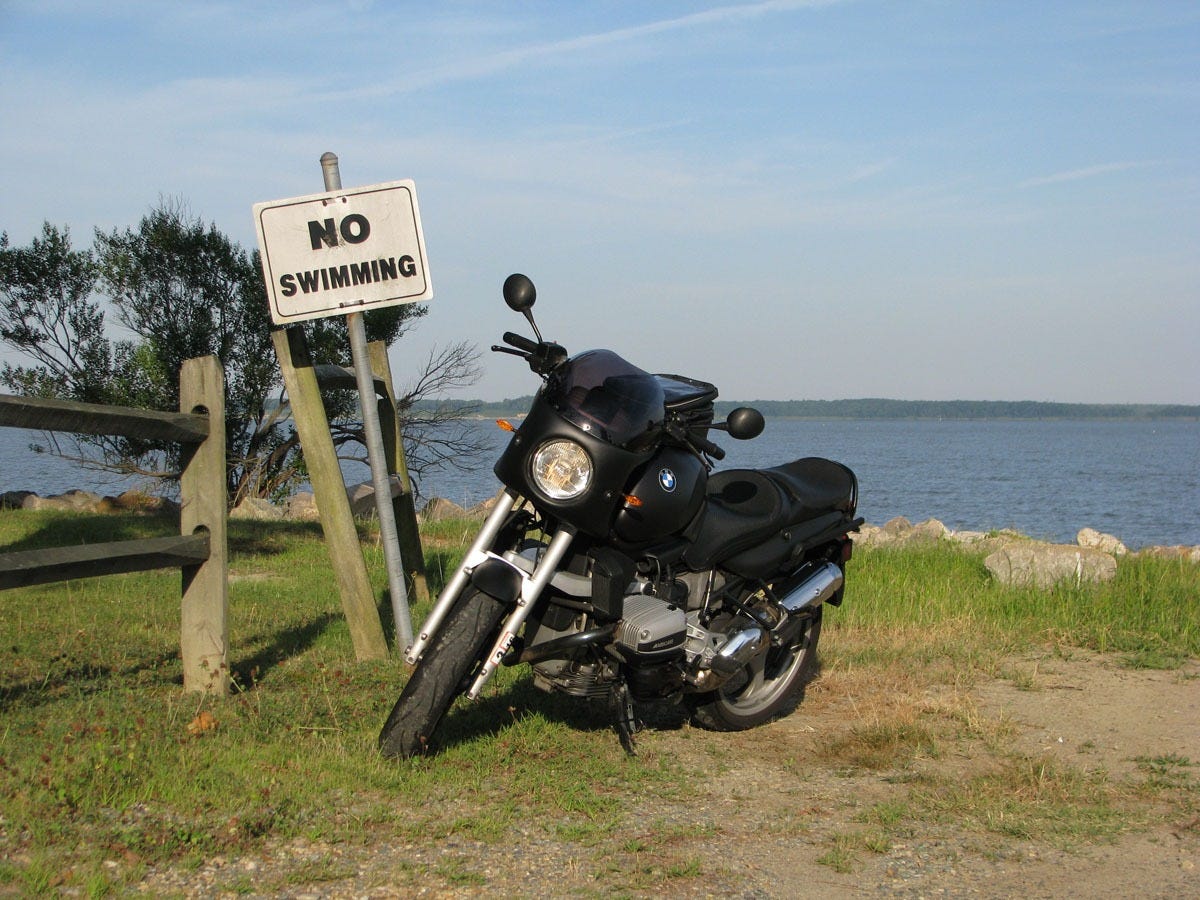
It was joy. Plain and complete. Not the kind that needs witnesses. In those years freedom came in narrow periods, measured by bedtime, fuel range, and how tired I could afford to be the next morning.
I rode Virginia’s forest roads after dark and sometimes the woods were full of small silver eyes caught between the trees. Any rider in deer country learns that bravery is not the virtue required there. Attention is. And luck too. A deer can remove all philosophy from a man’s life in half a second. None ever crossed my path.
Three months in, I was out past Seaford late at night, rolling along at about forty-five. The road was empty. The engine was warm. I had enough miles under me by then that my body had stopped negotiating every movement. I dropped it into third and opened the throttle all the way, only because I could. And because I was curious what the machine could do.
The BMW surged forward with a force I was not prepared for. It was not sharp or frantic power, but a broad mechanical shove from an old boxer that had been waiting patiently for the rider to ask a real question. The exhaust hardened into a metallic roar. The vibration sharpened through the bars. The road came at me fast, and the speed climbed into territory where the law would have taken a dim view of my enjoyment.
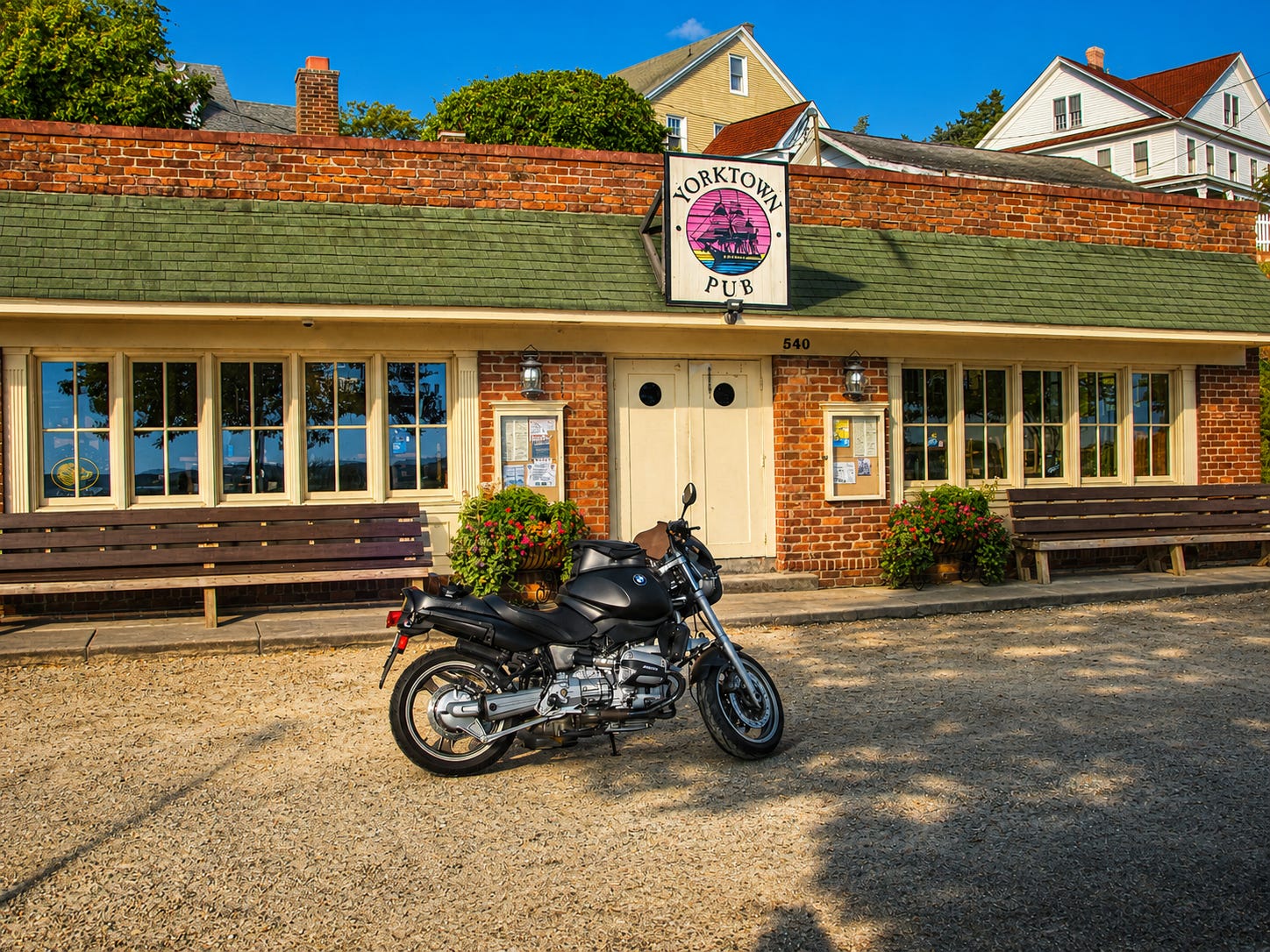
I kept the BMW for about a year, then sold it to another new rider for exactly what I had paid. There was regret in that. It had been there for the awkward turns, the empty roads around Yorktown, the parking-lot drops, the aching wrist, and the late rides after my son was asleep. One mile at a time, it had worn my fear down into growing confidence.
The new owner looked uncertain when he climbed aboard. I recognized the stiff shoulders and the careful way he searched for the friction zone. Perhaps, somewhere ahead of him, there was another cul-de-sac waiting.
I watched the black tank disappear down the street. For a few seconds I could still hear the boxer between the houses, the engine pulling away in that dry, uneven rhythm. Then it changed gear, and the evening swallowed the sound.