
Idle Competence
Six weeks of inspections end, and the body doesn't know how to stop looking for the next problem
The strange arithmetic of finished work: six weeks of noise collapse into one silent room, and the silence is heavier than the noise ever was.
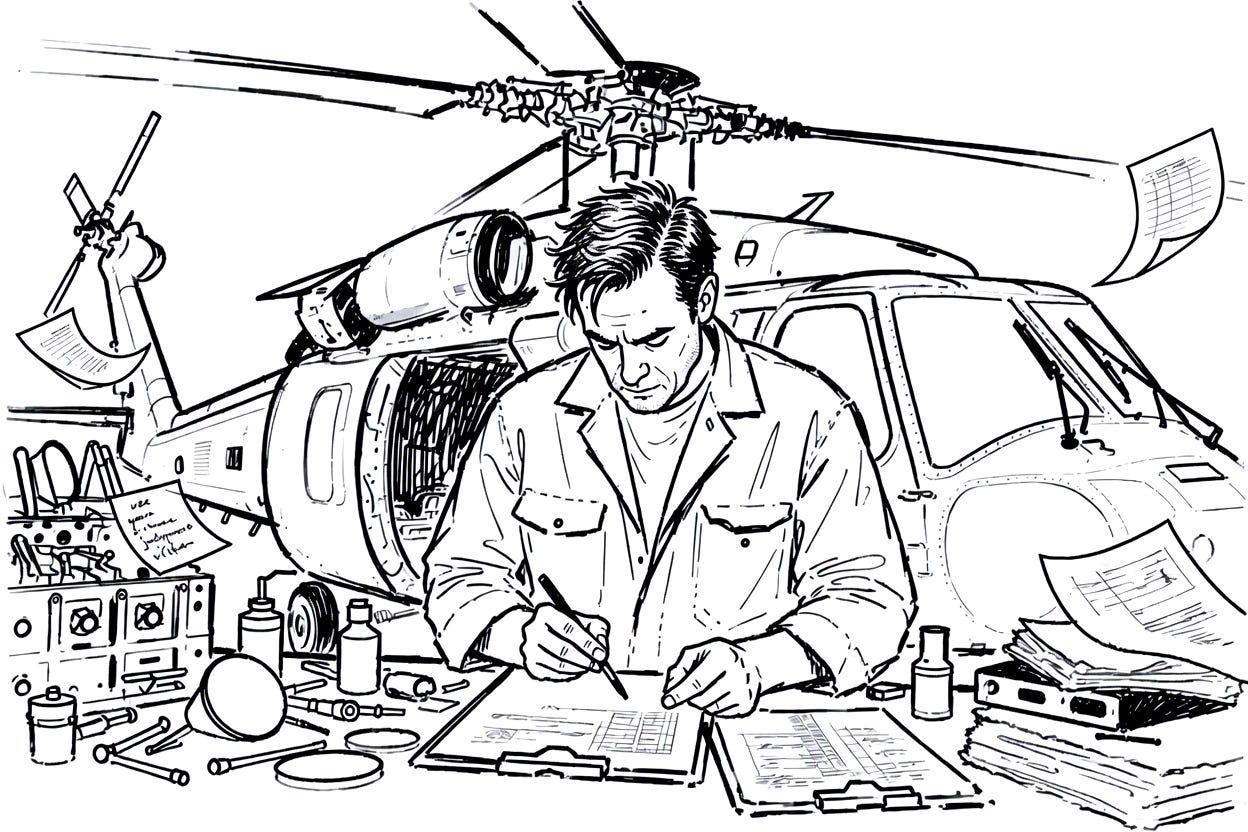
For a month and a half the UH-60 owned your calendar. Teardown, inspection, the endless comparison between what the tech manual says and what the aircraft actually shows you, which are never quite the same thing. What we call a PMI: Preventive Maintenance Inspection.
Somewhere in week three an engineer gives you an answer to a corrosion question that isn’t really an answer, just a more technical way of saying “use your judgment,” and you use it, and you write it down, and you hope the auditor reads it the way you meant it. The boss wants updates that don’t really exist yet because the work isn’t done yet, but he wants them now, so you invent language for progress that hasn’t happened. The program manager creates a new requirement out of thin air, an answer to a problem without precedent. The Army wants the aircraft back ASAP. The government auditor wants proof you did what you said you did, in the order you said you’d do it, documented in the format they’ve decided is the only acceptable format this year. And there are the miles and miles of paperwork at the end.
Airworthiness is not a feeling. It’s a signature, and the signature is only as good as everything underneath it, which means you carry the whole inspection in your body until the last box is checked. Every bolt torqued to spec; every part removed and reinstalled in accordance with technical procedures; all new parts checked for legitimacy and compliance; every tool accounted for; all the paperwork checked, corrected, scanned, reported and filed; everything is checked and double checked.
And then it’s over. The last box. The aircraft flies, or is cleared to fly, and the file closes, everybody is happy, and the thing that was the entire shape of your last few weeks is just gone.
Nobody prepares you for how loud that is.
You’d think a day with nothing due would feel like relief, and for the first hour it does. Then it starts to feel like standing in a room where the furniture’s been moved out. You’re ready for the next PMI already, just one week away: briefing is done, prep is done, you double checked everything on the first fifteen minutes of the day, there’s nothing left to be ready for that isn’t already handled, and that readiness itself becomes a kind of problem.
Competence doesn’t know how to idle.
It looks for the next ambiguous procedure to interpret, the next auditor’s question to anticipate, and when it can’t find one, it just runs in place, burning the same fuel with nowhere to put it.
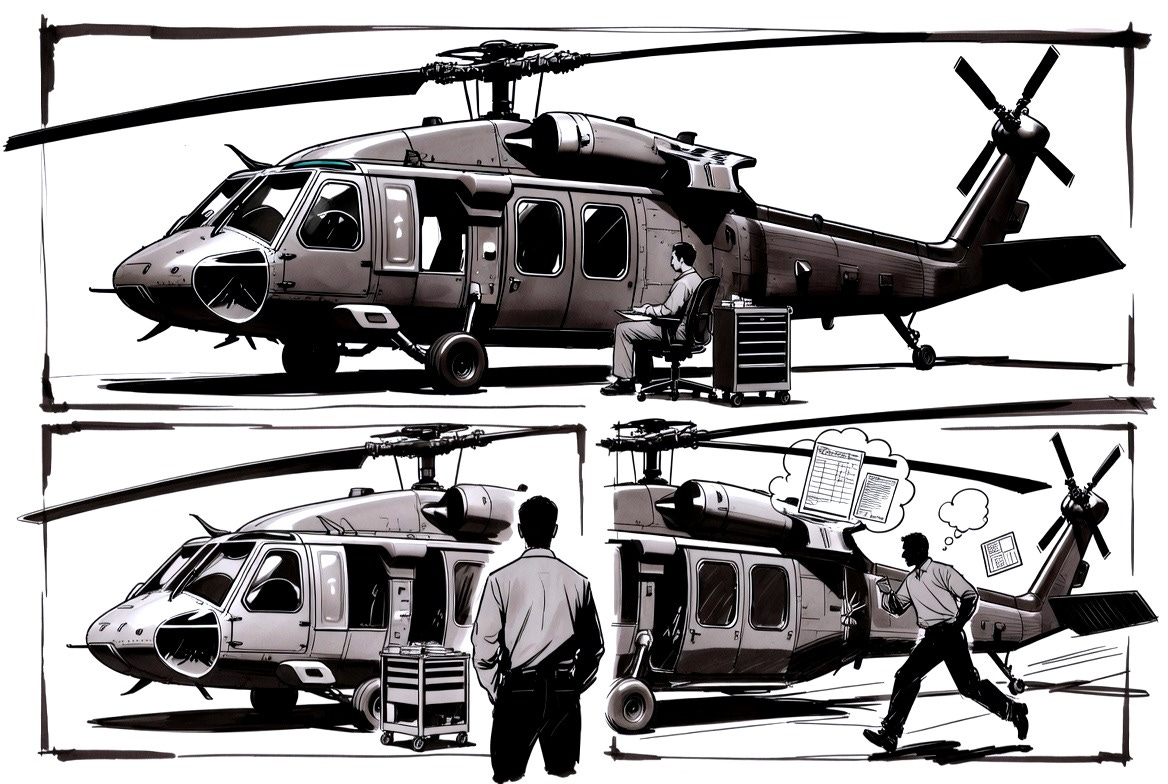
This is the part nobody puts in the job description: the work has a rhythm, and the rhythm has an off-beat, and the off-beat is this. A day that refuses to end because there’s no deadline pulling it forward. Time without a task doesn’t feel like freedom right away. It feels like drag.
Maybe that’s the honest shape of it. The storm was hard, but the storm had a direction. This has none, not yet. Just dead air on open seas. Just the knowledge that Monday brings the next storm: the next aircraft, the next teardown, the next engineer who’ll answer a question sideways, the next auditor who’ll want it his way, the new unreasonable requirement from a program manager several thousand miles away. Today is just the gap between two versions of the same discipline, and the gap doesn’t owe you meaning. It’s just long, and it’s just quiet, and eventually it ends the way all the loud days did too, without asking your permission.
Thanks for reading Quiet Roads. If this found you between your own storms, consider subscribing, new essays land when the work allows for them, not on a schedule.