
The Gap Kia Couldn't Close Alone
Before Kia made cars, before it made motorcycles, it made bicycles. Honda helped Kia bridge the gap.
If you want to understand why and how Korea became a Cub country, you have to start with what it was before it had one. A time when the motorcycle was not yet a normal object on Korean streets, when most personal movement happened at the pace of a man or an ox cart, and when mass motorization was still just an idea someone else was having, in another country.
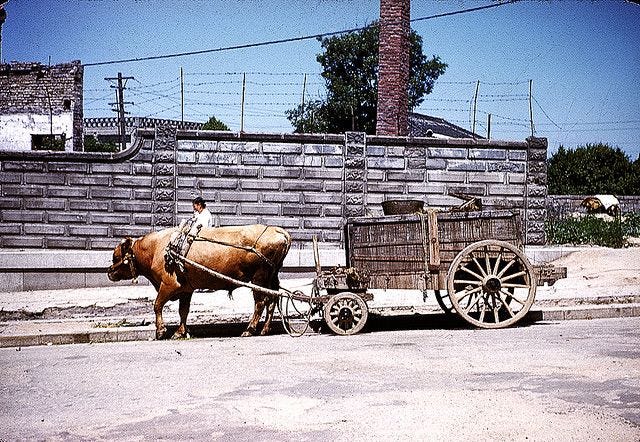
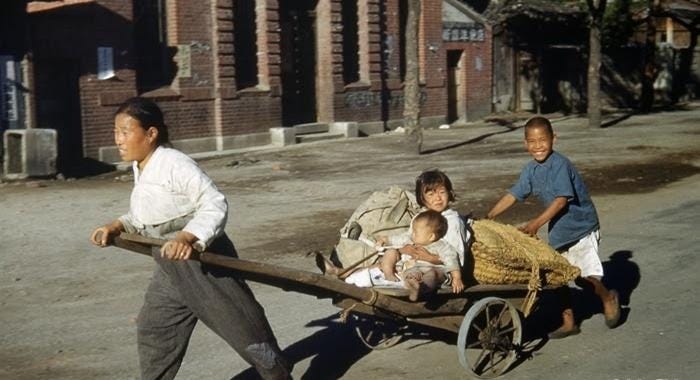
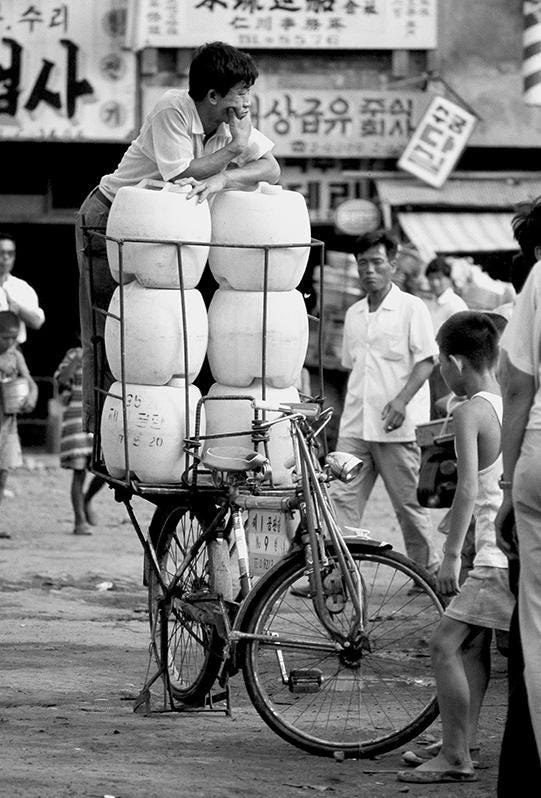
Korea in the mid to late 1950s was not a market waiting to happen. It was a country rebuilding itself from the ground up after the Korean War. Steel was scarce, foreign currency was tightly controlled, and anything imported had to justify itself in front of people who had very little to spend. A motorcycle was not a product yet. It was a decision, and that decision touched government policy, industrial planning, and the plain business of getting through the year.
In the middle of that sat Kia Industries, not as a motorcycle company, but as something simpler. Kia made bicycles.
It started life in 1944 as Kyungsung Precision Industry, cutting steel tubing and bicycle parts by hand out of a small shop in Yeongdeungpo, south of Seoul. In 1951 the company produced Korea’s first domestic bicycle, the Samchully. [The renaming to Kia Industrial Company followed the next year, not on the same day as the bicycle, though the two events sit close enough together in most accounts that they get told as one story.] The name itself is worth sitting with. “Ki” (起) means rising. “A”(亞) stands for Asia. Rising out of Asia. That is a large claim for a company still hand-forming steel tubing in a shop that had not yet built a single engine.
The move from bicycle parts to complete bicycles matters more than it looks like it should. A bicycle is not just a product, it is an industrial base. Underneath the simplest form of mechanized transportation sits everything a country needs to build something more complicated later: the ability to cut and shape tubing, weld frames, machine bearings, spoke a wheel, cure rubber, understand where a joint will fatigue and why. It means a workforce that can build something that rolls straight and survives being ridden badly on a potholed road, which is most Korean roads in the 1950s. It means an assembly line, logistics, and the discipline of making the same part come out right ten thousand times in a row.
Across the East Sea (or Sea of Japan if you take the Japanese viewpoint), Soichiro Honda had been looking at the same problem from the other side of it.
Japan after the war (World War II here, not the later Korean War) faced the same shortages: limited fuel, wrecked infrastructure, a population still riding bicycles because there was nothing else to ride. In 1946 Honda founded the Honda Technical Research Institute, and his first move was not to replace the bicycle but to extend it. The Honda Cub F, a small engine you bolted onto whatever bicycle you already owned, took the most efficient machine in the country and gave it just enough power to be worth more of your day.
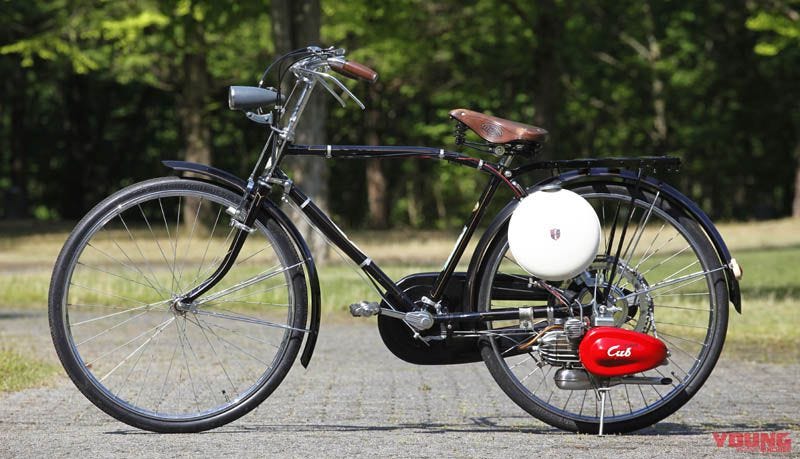
That parallel is worth noticing, and so is the difference underneath it. Japan already had a bicycle industry, building its own since the early 1900s. Honda didn’t need to build that industrial base. It was already there. What he needed was to bolt an engine onto its frame, and that is where he put his effort: carburetion, ignition, small-displacement engines, first as bolt-on kits and then, by 1949 with the Dream D-Type, as complete motorcycles in their own right. A year before that, the company had already become Honda Motor Company, which tells you the shop-experiment phase was over.
Kia started at the bicycle because Korea’s industrial base came later than Japan’s, by a few decades. Korea had to build the foundations of its industry first. Kia spent the 1950s doing exactly that: building frames, welding steel, perfecting volume assembly, building a repair and distribution network in a country where transportation itself was still being worked out. What it did not have, in any form that left a trace, was an engine.
Colonial history sits underneath all of this and it is worth naming plainly rather than skating past it. Korea was a Japanese colony from 1910 until 1945, a period that carries real and lasting harm for Koreans, and one that also left behind railroads, communication networks, and administrative systems built under Japanese organization. Korean businessmen had operated inside that system for two generations. Independence in 1945 did not erase the operating knowledge that came with it, even as the country rejected everything else about the arrangement. By the time Korea began rebuilding after its own war, Japan had already gone through its postwar industrial recovery. It was the nearest model on hand, the one Korean industrialists understood best, however complicated that understanding was to hold onto. No doubt Korean businessmen of the time spoke fluent Japanese and had been educated in Japanese schools and universities. So they followed what they knew best. They looked east for answers and inspiration, naturally.
So when Kia and Honda end up shaped by the same conditions only a decade apart, it is not coincidence. It’s two companies working the same problem from either side of a strait, one building the engine first, the other learning to build everything an engine needs to sit inside of.
I want to be honest about where the evidence runs out. It’s easy to imagine a stray Cub F or Dream D-Type finding its way into Korea in this period, and if one did, it would have turned heads. But that’s speculation, nothing more. There are no model names, no advertisements, no production records from Kia in the 1950s that show it building or assembling motorized two-wheelers. If that had happened at any scale, something would have survived to prove it. What Kia was doing was building capacity, not product, and that distinction is the whole shape of the story.
Korean history rarely moves in a straight line. It moves in painful jumps: the abrupt shove out of feudalism under crushing colonial rule, the leap from war rubble into industrialization from the 1960s onward, the intense industry-focused quasi-fascist government of Park Chun-hee, the automotive industry going from nothing to globally competitive inside a generation. Korea doesn’t creep forward. It waits for its prey, and then it jumps like a tiger. By the late 1950s it was coiled for a jump in transportation, whether anyone in the country could see it coming or not.
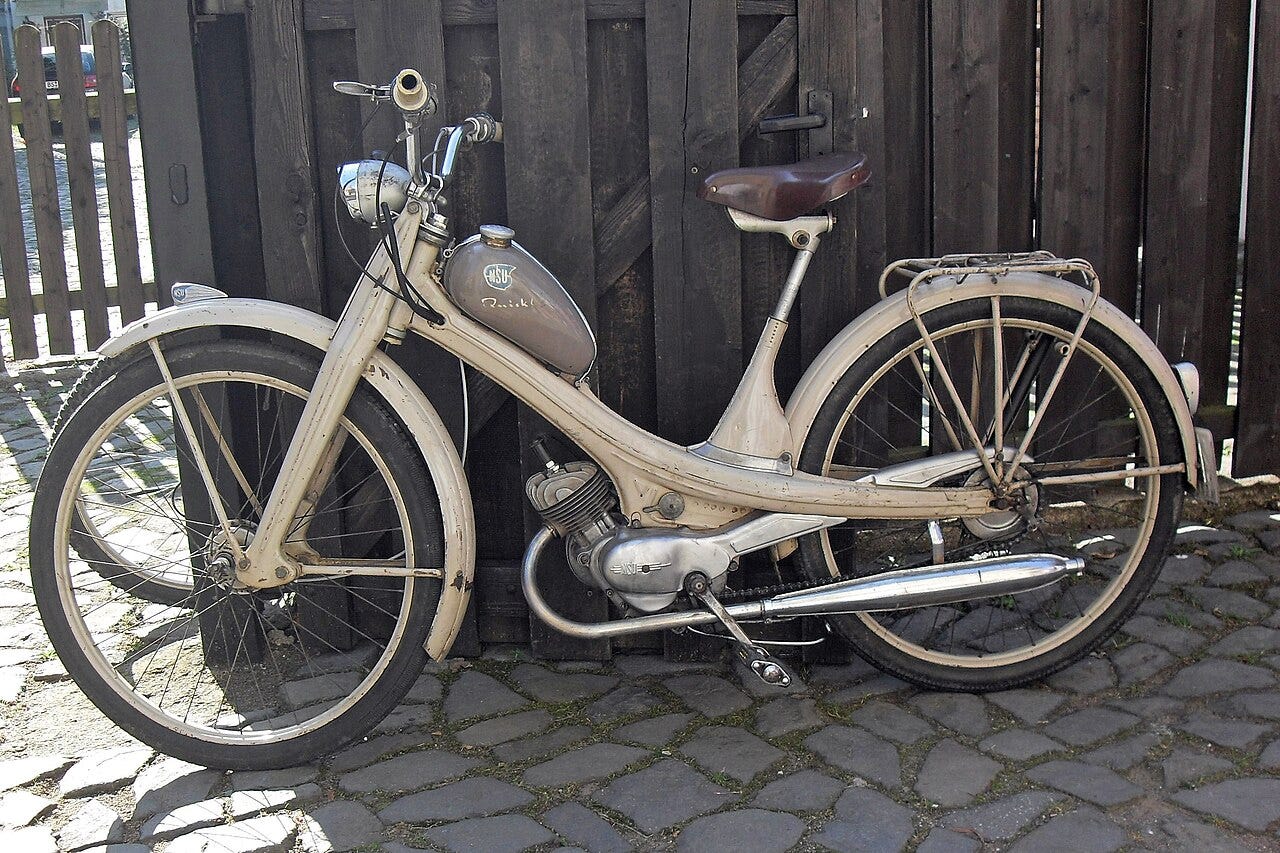
That jump came out of Japan, and before it reached Japan, it had already been worked out in Europe. Machines like the NSU Quickly established the underbone layout by the early 1950s, a step-through frame in pressed steel with a small engine slung low. It wasn’t a Japanese idea and it wasn’t a Korean one. It was a solution enough countries were reaching for at once that it stopped belonging to any of them.
Soichiro Honda saw it on a visit to Germany in 1956 and carried it home with him. When Honda Motor Company built the Super Cub C100, they didn’t invent the layout, they refined it against everything Honda already believed about how a motorcycle should behave. He passed on the two-stroke engines common in Europe, since they were loud and made you carry oil to mix with your fuel by hand, a dirty habit he had no interest in building into a mass-market machine. He specified a 17-inch wheel instead of the 12-inch wheels common on Italian scooters, because Japan’s roads were rougher than Italy’s smoother ones and a bigger wheel shrugs off more of that. He fit a molded plastic leg shield straddling the frame, cheap to produce and effective at keeping weather off the rider’s legs.
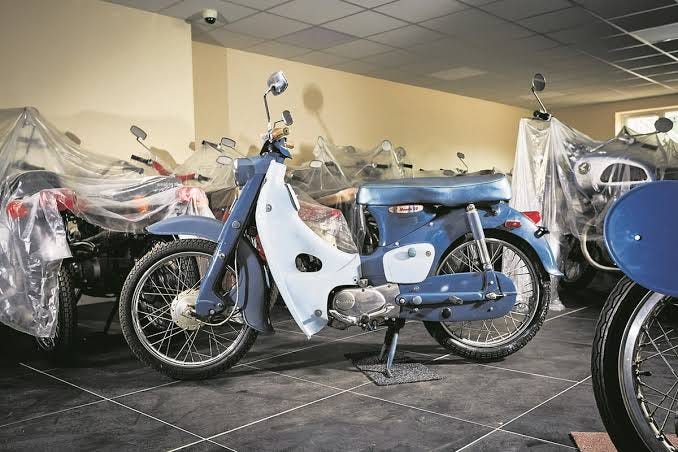
Takeo Fujisawa, Honda’s business partner and the man running strategy, pushed the harder requirement: the machine had to be usable by anyone, in ordinary clothes, on an ordinary errand, not just by people who already thought of themselves as motorcyclists. That single requirement is what forced the centrifugal clutch into existence, a transmission you could operate with one hand because your other hand might be holding a tray of noodles.
The result was quieter, cleaner, more durable, and easier to ride than anything that came before it, and Honda built it in numbers nobody else could match. By 1958, when the Super Cub launched, NSU had already sold 1.2 million Quicklys, a genuinely respectable number. By 1965 the Super Cub had passed it, and the Quickly slid out of most people’s memory entirely.
Kia was still making bicycles when this was happening in Japan, but it was watching. It did not participate in the Cub’s development. It inherited the result of it.
The turn came in 1962, when Kia entered a technical cooperation agreement with Honda to build the Super Cub C100 under license in Korea. This wasn’t a casual license deal. It’s the point where Korea’s motorized future stopped being a rumor from across the water and became an industrial fact on Korean ground. Kia stopped being only a bicycle maker that day. Honda brought the engine, the carburetion, the ignition timing, the tolerances, and a production philosophy Kia hadn’t needed until now. Kia brought over a decade of building bicycles, the knowledge of industrial assembly, and the practiced ability to adapt a design to Korean roads and Korean needs. The gap between those two capabilities is where the Korean motorcycle industry actually starts.
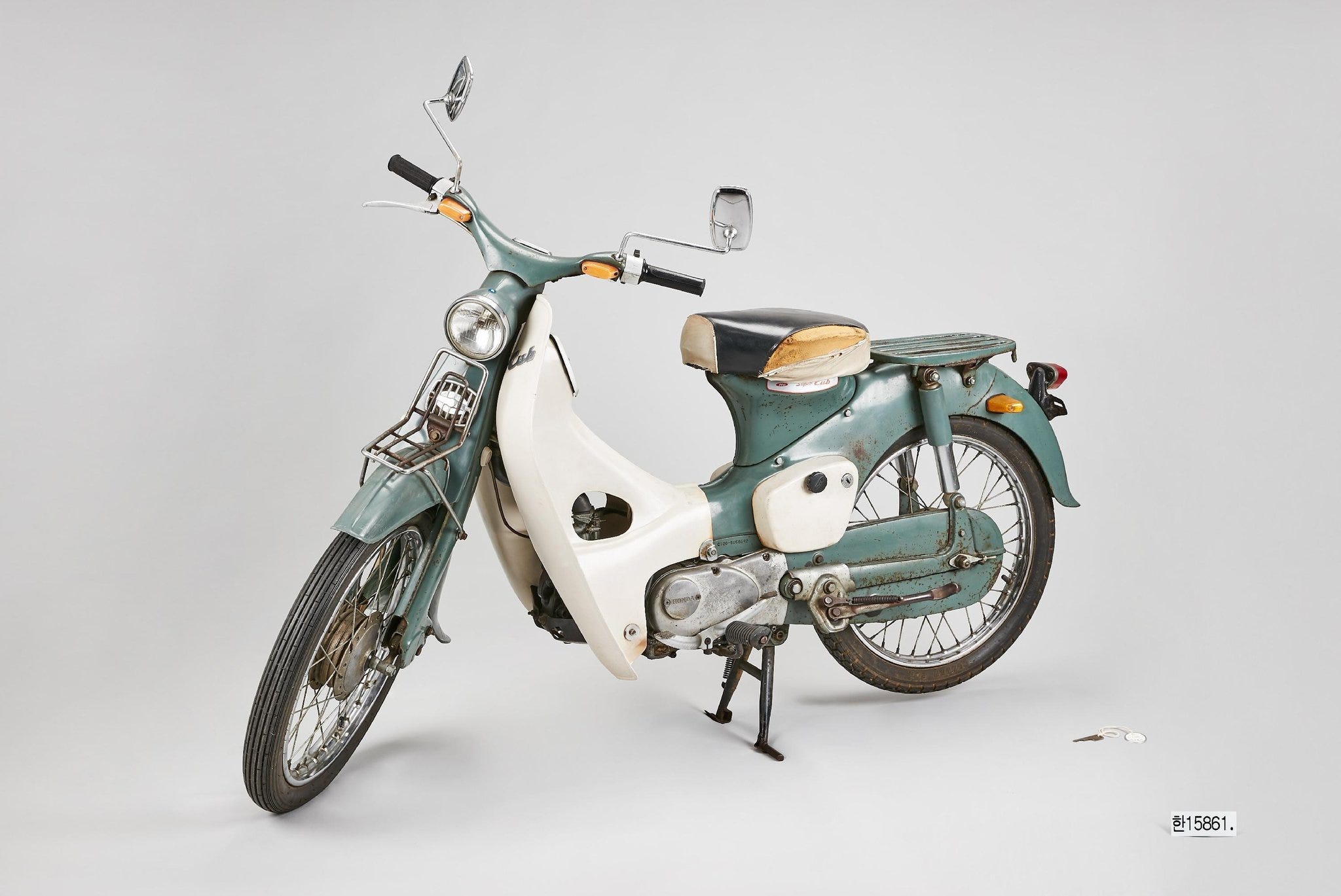
Four years pass between the Super Cub’s 1958 launch in Japan and its appearance as a Korean-built machine, longer than a tidy origin story would want. Some of that time went into standing up a plant and training a workforce to assemble something considerably harder than a bicycle. Some of it I can’t account for with anything solid, and I’d rather say that plainly than paper over it with a guess.
That first Korean-built Cub was not just another product line. It became the machine that delivery riders, small shop owners, mechanics, farmers, policemen, and families would run into daily for the next several decades, mostly without thinking about where it came from.
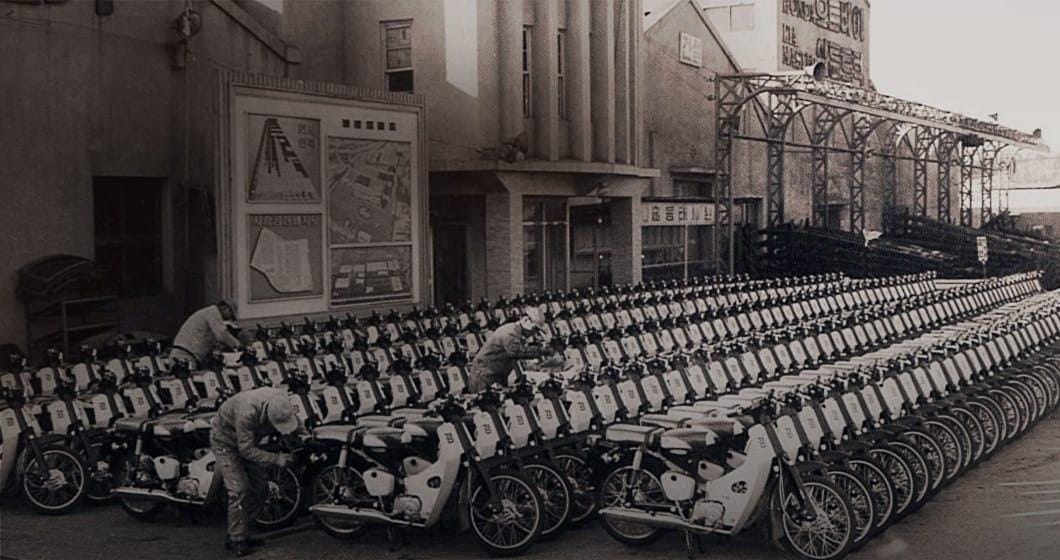
Here’s the part worth sitting with. Kia didn’t arrive at its own Cub through a slow crawl of half-finished motorized bicycles and awkward hybrids. It went from bicycle maker to licensed motorcycle producer in one clean move, which is why the Korean underbone story has no messy middle chapter. Nothing had to be invented on Korean soil, because the design had already proven itself somewhere else first. That makes the whole lineage inherited rather than experimental. Every Korean underbone that came after it, Kia’s, Daelim’s, Hyosung’s, traces back to the moment Honda’s finished answer landed in a country that was ready to put it to work.
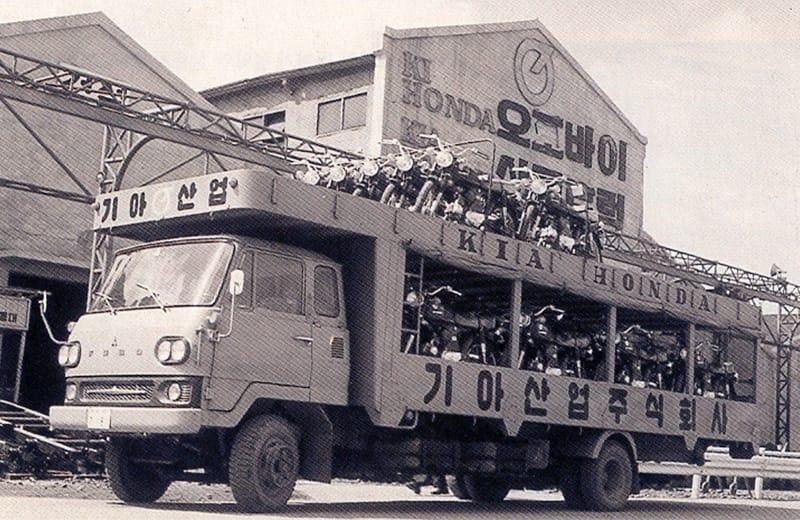
So if you go looking for the beginning of Korea’s underbone culture, you won’t find a machine sitting at the start of it. You’ll find a gap: a country with bicycles and no engines, a manufacturer with the skill to build everything around an engine except the engine itself, and a partnership that closed that gap in a single decisive step.
That's where the story really begins. All the underbone bikes I've ridden since carry a piece of it forward differently. A modern Honda Super Cub, built to the Honda’s own recipe with no middleman involved. A Daelim Honda Citi 100, which I am restoring, descended from a Honda license Daelim started in 1982 when it absorbed Kia's motorcycle division outright and the two lineages became one company. A KR Motors Chat 110, which owes nothing to either Kia or Daelim, instead having its DNA come from a Chinese clone of a Honda Super Cub.
Three machines, three different roads back to the same postwar scramble to put an engine on something that used to just be pedaled. Korea never had a Cub of its own to ride until it took someone else's answer and made it local.
References
Kia Corporation history, founding as Kyungsung Precision Industry, Samchully bicycle, 1952 name change: en.wikipedia.org/wiki/Kia and www.kia.com/in/discover-kia/our-story/heritage.html
Kia’s licensed production of the Honda Super Cub C100 beginning in 1962, first domestically produced motorcycle in Korea: Namu Wiki, en.namu.wiki/w/혼다 커브
Honda Super Cub C100 development, launch in August 1958, design decisions behind the four-stroke engine and centrifugal clutch: Honda Global heritage pages, global.honda/en/heritage/episodes/1956qualityproducts.html and global.honda/en/Cub/history/stories/vol4/part1.html
Honda Super Cub production history and specifications: en.wikipedia.org/wiki/Honda_Super_Cub
If you're digging up old factory photos and dealer records with me, subscribe, and buy me a coffee.