The Open Gate
A ride on a cheap bike in the hills of Asan, South Korea

The forest service gate was open.
That was enough. On any other morning it might have been padlocked shut, when the hills are dry and the fire risk is posted high. But this morning it stood open, and the Kub was already running, so I rode through without stopping to consider it.
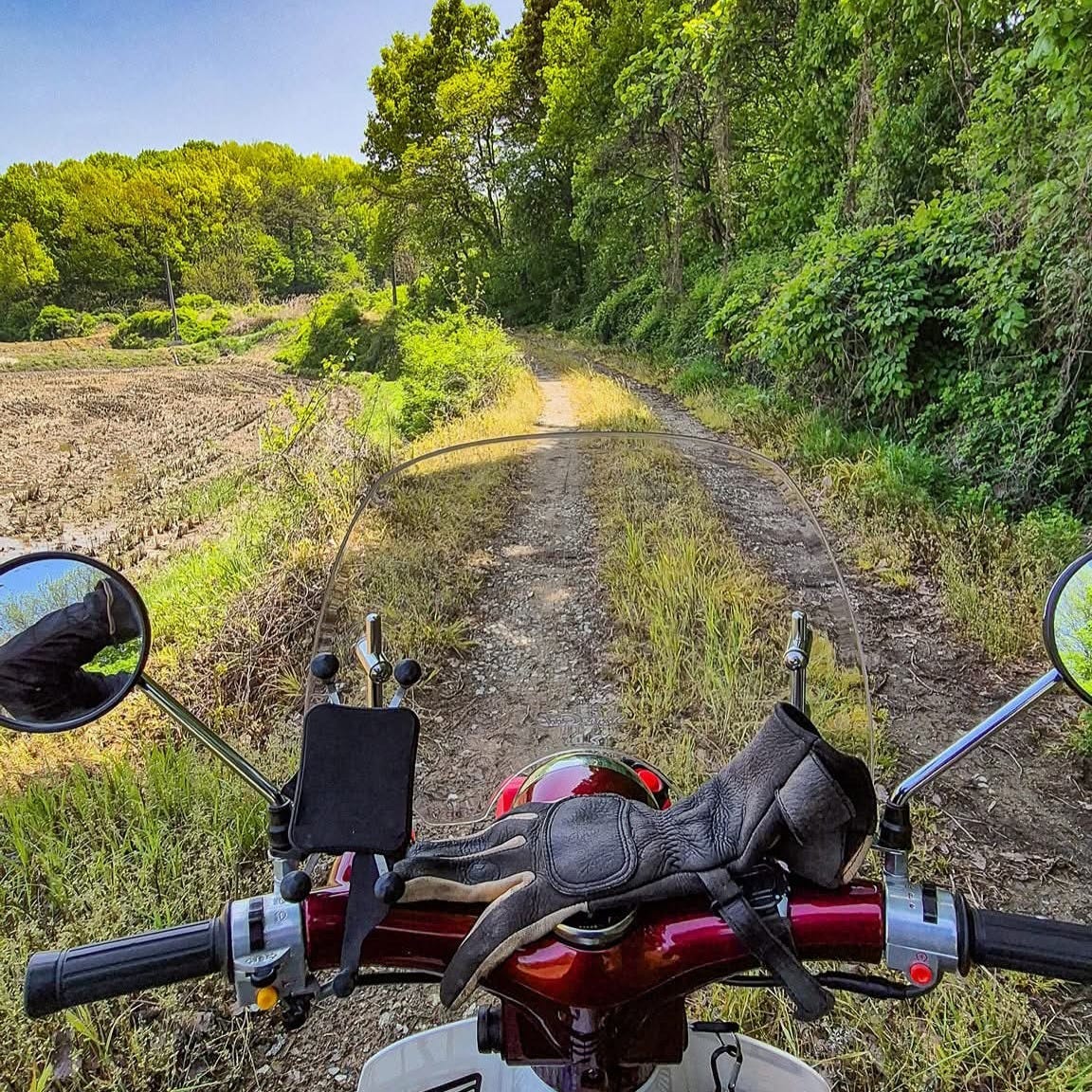
The Kub is a KR Motors Chat 110, a Korean-made clone that looks just like a Honda Super Cub, carries the same basic DNA, and costs considerably less. What the price difference buys you, or rather what it costs you, is about ten kilograms of solidity. The sheet metal is thinner. The parts are cheaper. The front suspension uses a leading-link setup, the kind of design that already felt old when the original Cub appeared in 1958. When you squeeze the brake lever, the front end rises instead of diving. The first time it happens, you think something has gone wrong.
Nothing has gone wrong. That’s just how it works.
The result is a bike that feels lighter because it is. It feels faster because nothing about it is settled. Slightly dangerous, in a way that keeps you honest.
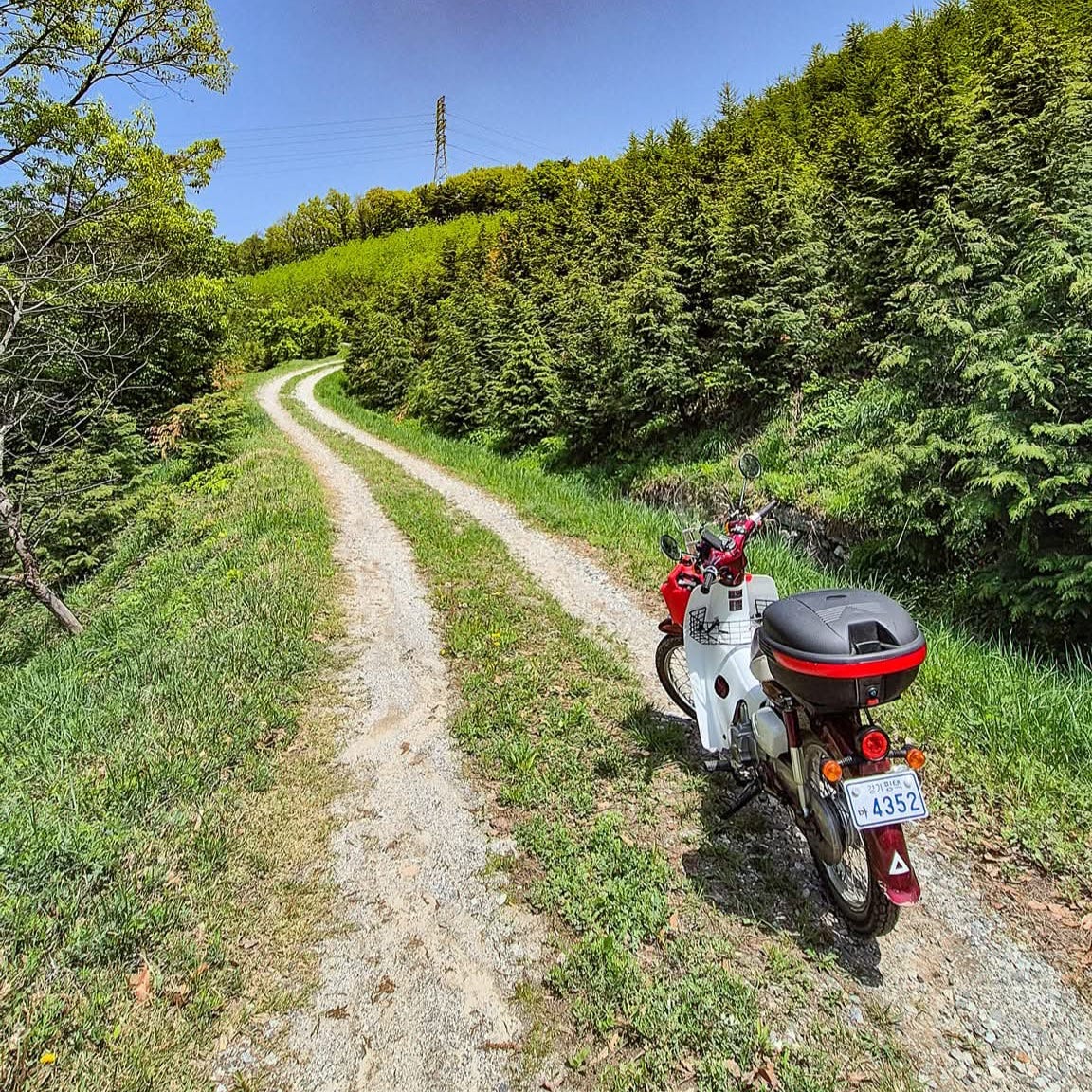
I followed the track up through pine forest. The trail was narrow, two tire ruts with grass growing between them, the kind of path that exists because someone needed to get a vehicle up a hill and never bothered paving it. The Kub is exactly the right machine for a road like that. A larger bike would feel out of place, too much machine for the scalee of the thing. On the Kub, the proportions were correct.
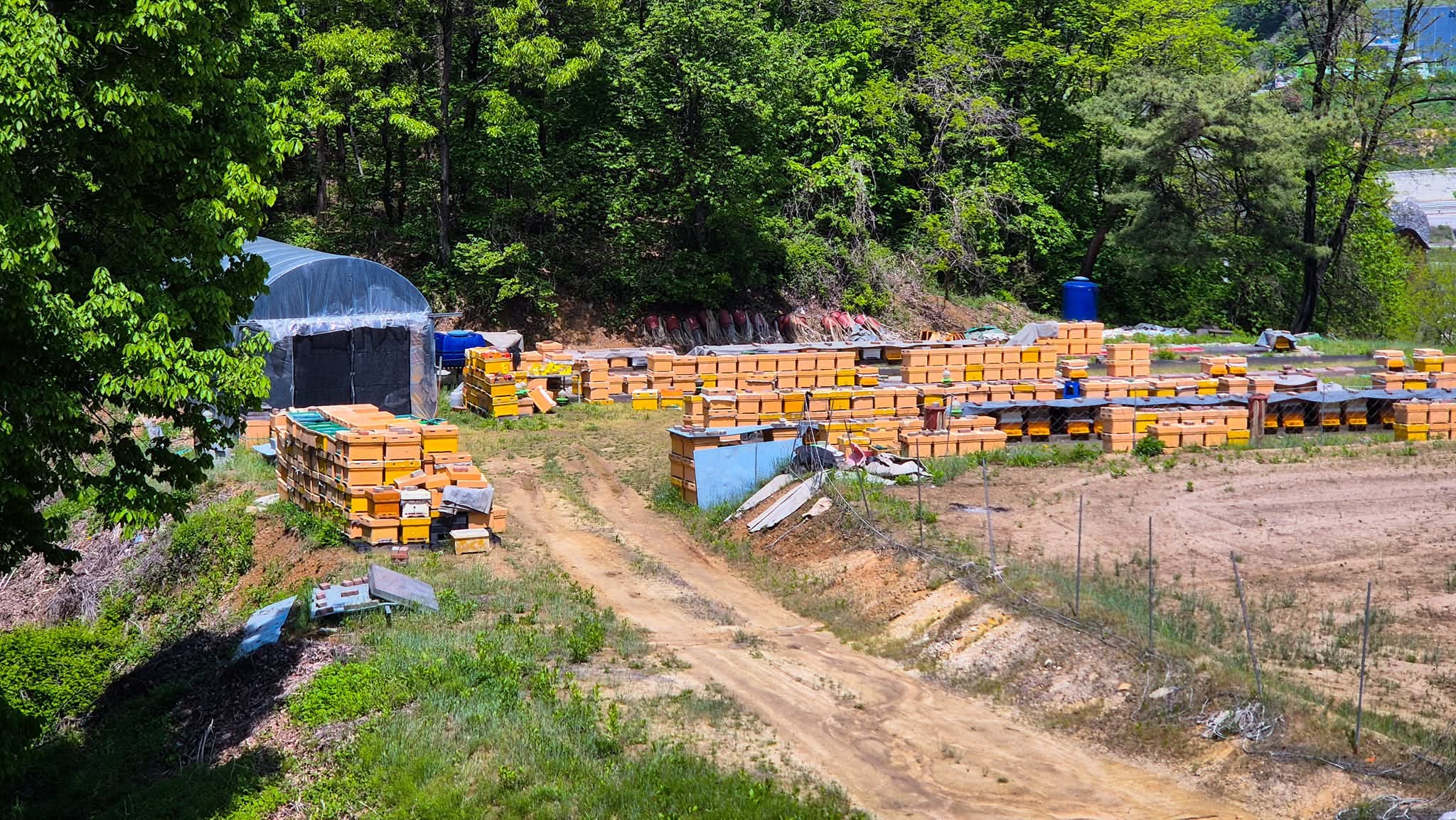
The track opened onto a ridgeline. Below and to the right, half-hidden behind the tree line, a beehive operation spread across a cleared flat. Dozens of orange boxes arranged in rows, a polytunnel shelter at one end, a dirt access road running down to the valley. No one visible. A CCTV camera mounted on a post. I slowed, looked, and kept moving. These mountain roads exist at the tolerance of the people who work the land. I had no business lingering where I hadn’t been invited.
Higher up, the trail turned to loose gravel and the Kub’s front end communicated every stone through the bars. Not violently, just honestly. There is a difference. A modern bike would have sorted that information before passing it to your hands. The Kub passes everything along unedited, and after a while you stop bracing against it and start readingit instead.
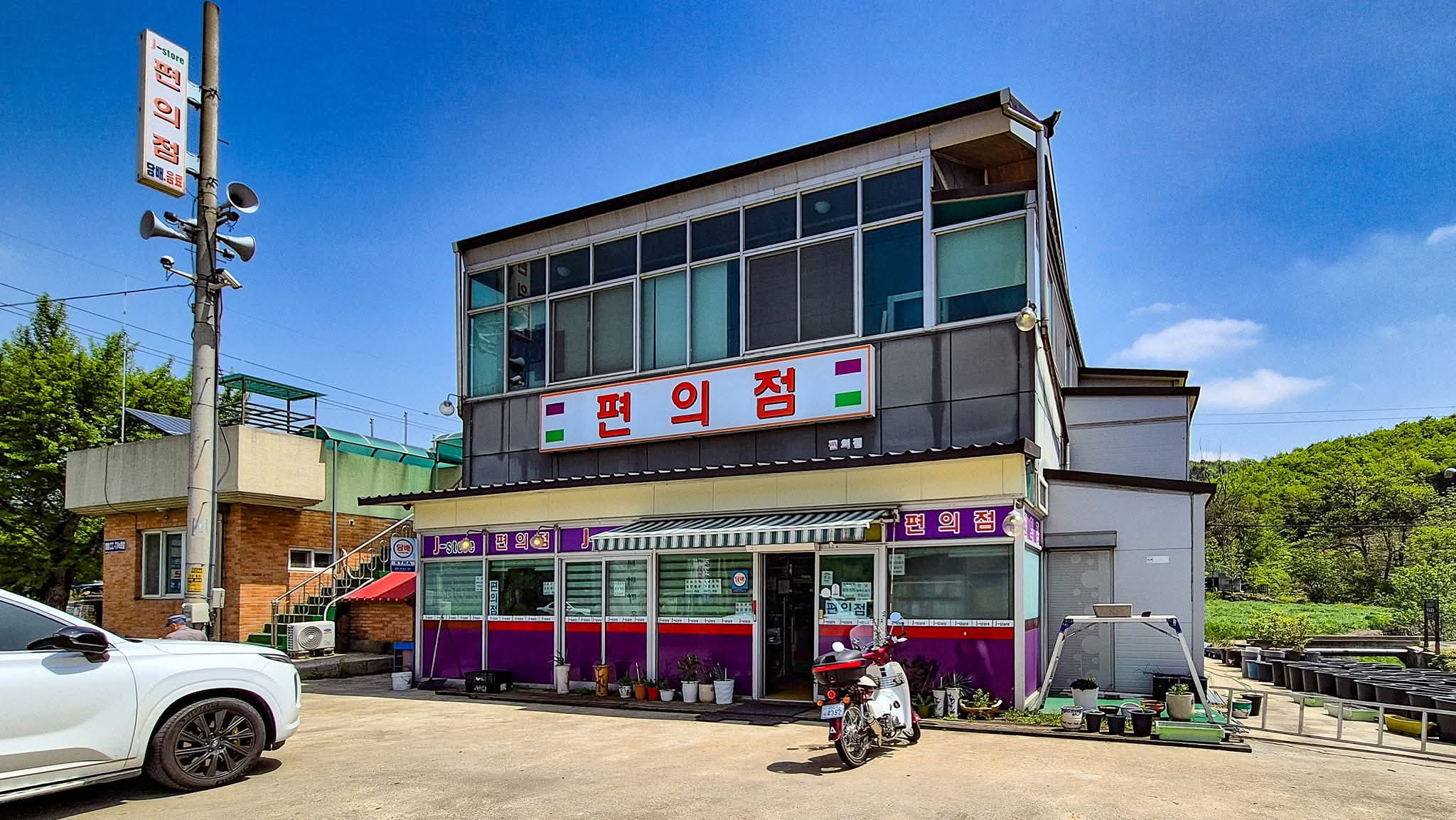
The top of the track was a small flat clearing, power line pylons marching off across the hill, the city visible in the haze maybe twenty kilometers out. I put the bike on its stand, opened the top case, and took out a can of cola I’d picked up at a convenience store on the way out of the village. It was warm by then but still welcome.
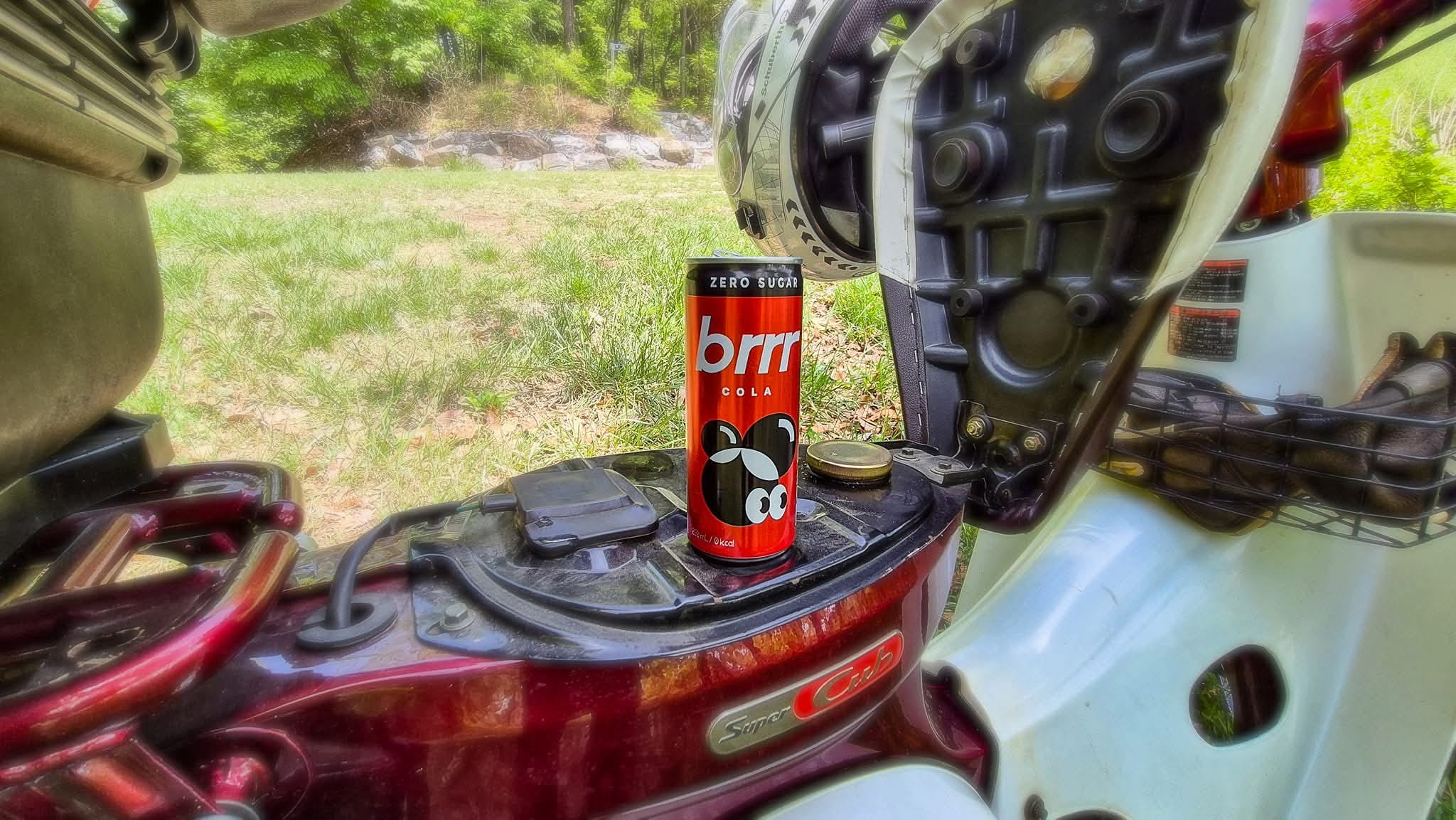
I was three or four kilometers from the nearest house. In this part of Korea, tucked into the low mountains behind an industrial zone, with rice fields on one side and pine forest on the other, it felt like a reasonable distance from everything. Quiet enough. The city in the haze could have been a photograph.
The Kub ticked as it cooled.
I finished the drink, put the can in the case, and started back down. The descent was faster than the climb, the loose gravel requiring more attention, the front suspension doing its unsettling trick on every braking point. I took it slowly. Not from fear, but respect for what the bike was telling me.
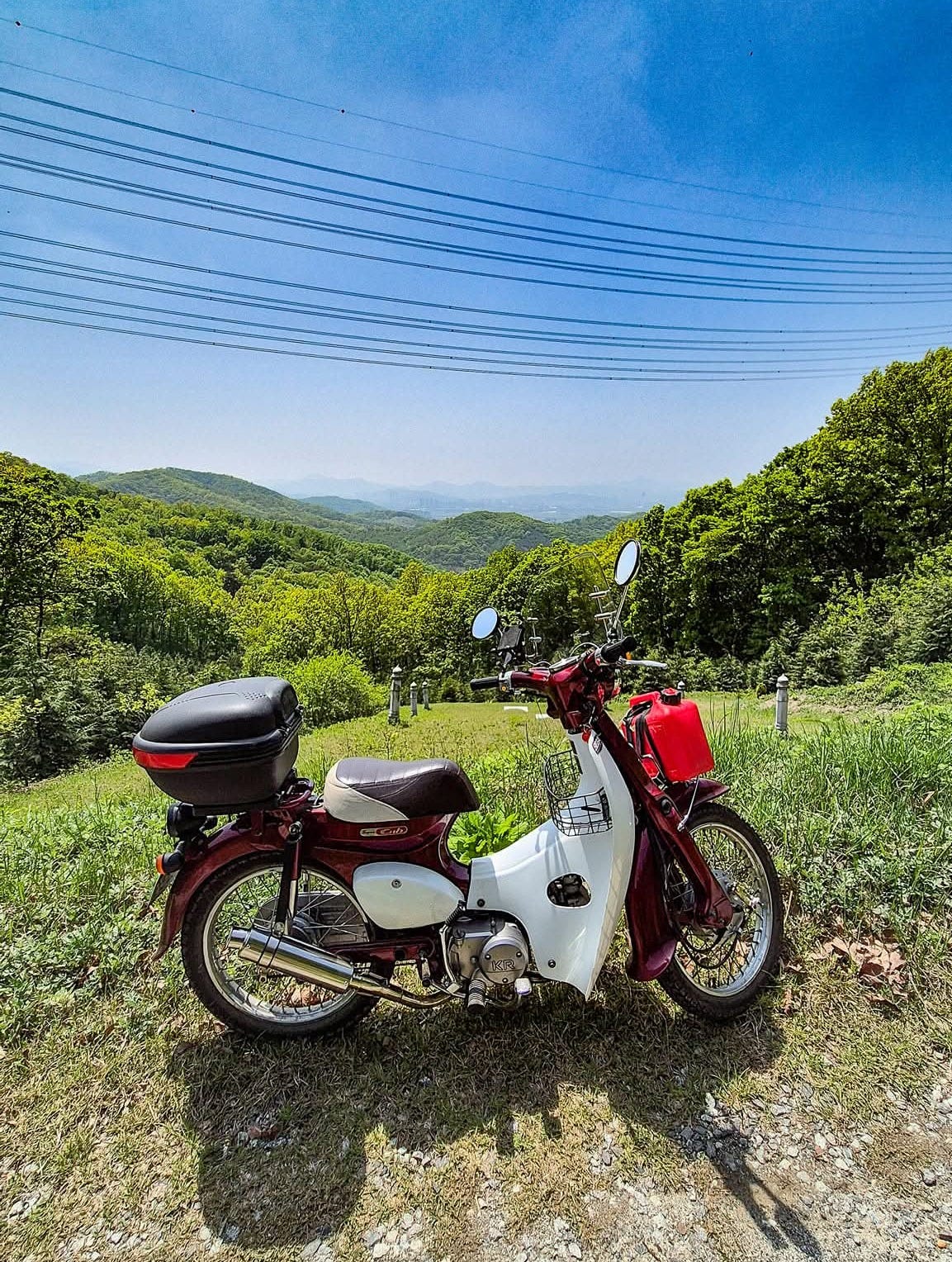
At the bottom, the gate was still open. I rolled through, back onto the paved road, and the Kub immediately felt different. More planted. Less interesting. The road home was smooth and direct and took about ten minutes.
I thought about the gate on the way back. How the whole morning had depended on it being open. Some days it is. Some days it isn’t. The mountain doesn’t owe you access. It just occasionally offers it, and the correct response is to go.